This is a subtitle for your new post
Learn the fundamentals first, and the rest of your grappling game starts to feel a lot less chaotic.
Starting grappling can feel like learning a new language with your whole body. One minute you think you’re doing fine, and the next minute you’re pinned, tangled up, or wondering how your hips ended up pointed the wrong way. We see that learning curve all the time, and we also see how quickly it smooths out when you focus on the right basics.
Our beginner curriculum is built around the same idea we coach every day: positions and movement patterns matter more than chasing flashy moves. When you can escape bad spots, control strong positions, and safely apply one or two reliable finishes, you stop relying on strength and start relying on skill.
Below are seven essential techniques we want every new student to build early, whether your goal is fitness, self-defense, MMA crossover, or just getting comfortable on the mats with solid fundamentals.
What “essential” means in beginner grappling
In our classes, “essential” doesn’t mean complicated. It means repeatable under pressure. The techniques below show up constantly in live training because they connect to core positions like guard, mount, side control, and back control. Mastering them gives you a framework so your training feels organized instead of random.
We also teach these with safety and progression in mind. You’ll drill, you’ll move, you’ll do controlled rounds, and you’ll get coached on details that keep your partner safe and keep you improving. That approach matters a lot, especially for families asking about youth grappling classes Vacaville and how to make training age-appropriate and injury-conscious.
1. Hip Escape (Shrimping): your number one movement skill
If we had to pick one movement that pays off everywhere in grappling, it’s the hip escape, often called shrimping. It’s the foundation of getting your hips out from under pressure and rebuilding a safer position, especially when you’re on bottom.
What it helps you do
Shrimping creates space. Space lets you recover guard, get your knees back in, recompose frames, and stop someone from settling their weight on your torso. Beginners often try to “push” someone off with their arms, but arms get tired fast. Hips are stronger, and hip movement changes the whole geometry.
How we coach it
We focus on turning to your side, pushing off the mat with your feet, and sliding your hips away while keeping your elbows in a protective frame. Once you can hip escape smoothly, you’ll notice you get stuck less often, and you’ll waste less energy trying to bench-press your way out of trouble.
2. Bridge and Roll (Upa): a simple mount escape that actually works
Mount is one of the classic dominant positions in grappling. When someone sits astride your torso with their knees on the mat and hips heavy, breathing gets harder and panic can creep in. The bridge and roll (upa) gives you a reliable first response.
Key idea
The bridge is not a gentle lift. It’s a sharp, committed explosion of your hips upward, followed by a roll that uses your opponent’s base against them. But it only works when you remove the posts that keep them stable.
The details we drill
We teach you to trap an arm and a foot on the same side, bridge high, and turn onto your side as you roll. Beginners often bridge straight up and then stop, which just resets the problem. The roll is the finish. When you time it right, you’ll feel the whole position flip, and suddenly you’re on top, breathing again, with options.
3. Scissor Sweep: turning guard into top control
Guard is one of the most important concepts in grappling: using your legs to control distance and disrupt posture even when you’re on your back. The scissor sweep is one of the first sweeps we teach because it’s mechanically clear and teaches core guard principles.
Why it’s beginner-friendly
It teaches off-balancing, posture control, and angle creation without requiring advanced flexibility. You learn to load your partner’s weight onto the right line, then remove the base like pulling a chair out from under someone.
What we want you to feel
We want you to feel your shin cut across their belt line while your other leg acts like a chopping motion. Combine that with a sleeve or collar control (or a simple overhook and posture break in no-gi contexts), and the sweep becomes a repeatable way to go from bottom to top without scrambling.
4. Mount control: how to hold a dominant position (not just get there)
Getting to mount is great. Keeping mount is what changes your results. In beginner grappling, people often reach mount and immediately lose it because their weight is too high, their knees are loose, or their focus is on “doing something” instead of controlling.
What mount is really for
Mount is a platform. From there you can stabilize, tire your partner out, and choose safer attacks. Control first. Submissions later. When you treat mount as a place to breathe and think, your whole game settles down.
Our go-to mount concepts
We teach low hips, active knees, and pressure through your opponent’s torso, not through frantic squeezing. We also teach simple transitions like moving to high mount when you need arm isolation, or switching to technical mount to follow someone turning. The goal is to stay connected so your partner carries your weight.
5. Side control: pressure, frames, and clean transitions
Side control is another fundamental pin in grappling, and it shows up constantly in both sport and self-defense contexts. You’re perpendicular to your partner, controlling the head and near-side arm while keeping your weight heavy and your base wide.
What beginners often miss
Side control isn’t about crushing. It’s about structure. If your hips are too high or your elbows flare, you leave gaps. Gaps turn into escapes. We coach you to use your shoulder pressure smartly, keep your knees ready to sprawl or walk, and switch between holds based on your partner’s movement.
A practical way to think about it
Your job in side control is to stop the hips from turning in and stop the shoulders from turning out. When you can manage those two things, you’ll feel like the position “locks” and transitions become calmer, not rushed.
6. Single-leg takedown: bringing the fight to the mat safely
A lot of new students start grappling on the knees or from a clinch because stand-up feels intimidating. That’s normal. But learning a basic single-leg takedown gives you a clean entry from standing, and it helps you understand balance, posture, and timing.
What we emphasize for beginners
We prioritize safety and posture. Head position matters. Back position matters. And you need to learn how to finish without slamming, especially when you’re training with teammates of different sizes or when you’re in youth classes with stricter control rules.
Here’s a simple progression we use to make the single-leg feel learnable without turning it into chaos:
1. Start with a balanced stance and controlled grips, then step in to close distance safely.
2. Change your level by bending your knees, not folding your back.
3. Capture the leg tight to your body and keep your head in a strong position.
4. Drive with your legs while turning the corner, not pulling with your arms.
5. Finish with control so you land in a dominant top position instead of falling into a scramble.
Once you understand this, takedowns stop being a stressful unknown and start feeling like another skill you can practice piece by piece.
7. Armbar: a high-percentage submission you can build around
Submissions are exciting, and the armbar is one of the classic finishes in grappling for a reason. It appears from mount, guard, and transitional scrambles. But we teach it as a position first, not a fast yank on an arm.
Safety and mechanics come first
An armbar works by controlling the elbow line and extending the hips to create pressure. The key is control: controlling the wrist, controlling the elbow, controlling your opponent’s posture, and pinching your knees so the arm can’t slip out. We also coach you to apply submissions slowly in training and give your partner time to tap.
Where beginners find it most accessible
Many students learn the armbar from mount because the steps are straightforward: isolate an arm, climb to high mount, swing the leg over the head, and secure the line before you extend. When you’re patient and precise, it becomes a dependable finish rather than a frantic attempt.
How to practice these techniques without feeling overwhelmed
Beginners often want to collect moves. We’d rather you collect reps. In grappling, improvement comes from doing the same core actions so many times that your body stops negotiating with itself.
Here are a few habits that help our new students progress faster without burning out:
- Show up consistently, even if it’s just two classes per week, because skill builds on exposure.
- Ask for one correction at a time so you can actually apply it in the next round.
- Spend extra time on escapes like shrimping and the bridge and roll, because they keep you safe while you learn.
- Do positional sparring from mount, side control, and guard so you get “real” reps without total randomness.
- Keep a simple note after class: one detail that worked and one thing to fix next time.
This is also why grappling in Vacaville has become such a good fit for busy adults and families. When training is structured and progressive, you don’t have to be fearless to start. You just have to start.
Youth training note: how fundamentals translate for kids and teens
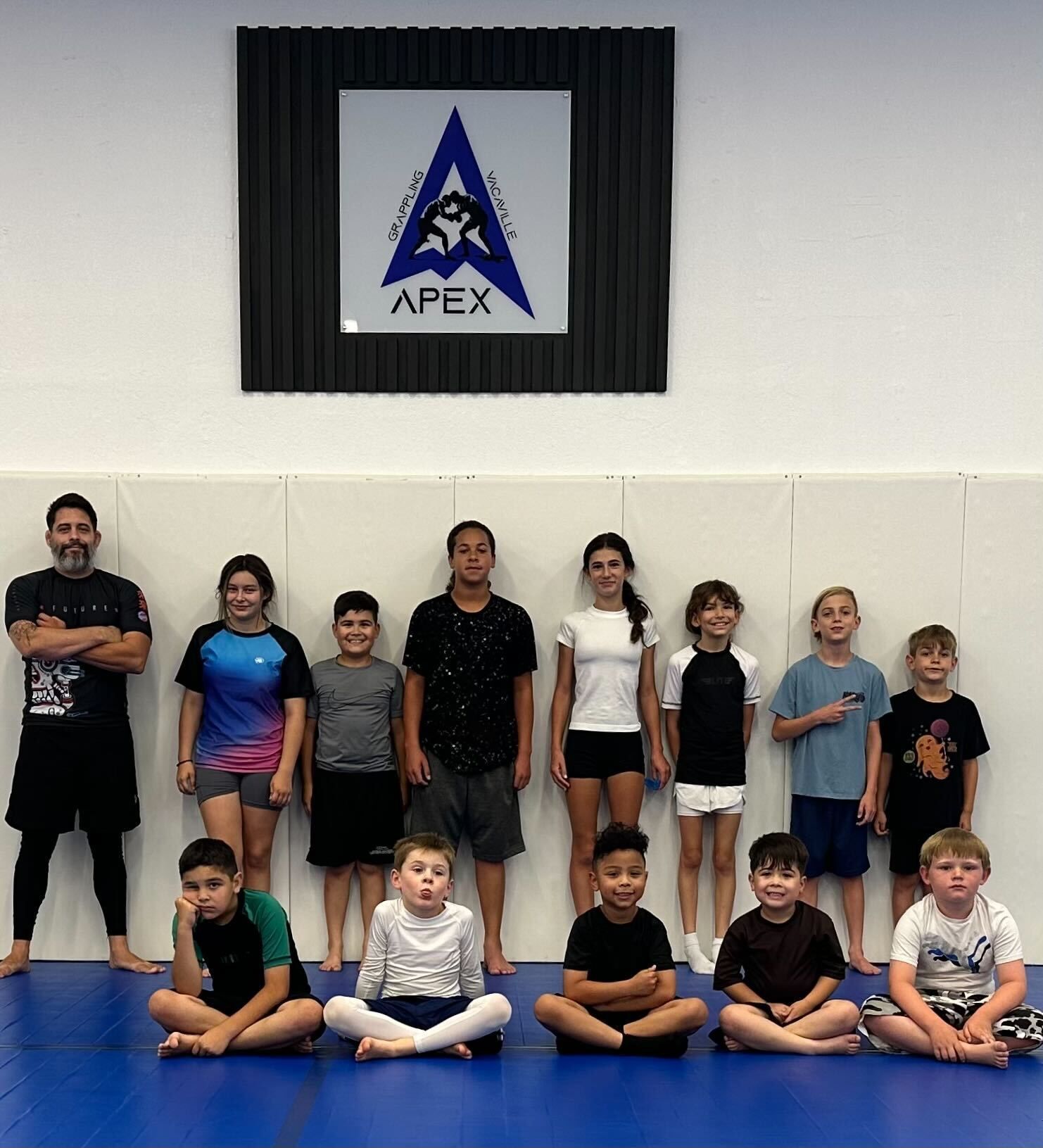
When families ask about youth grappling classes Vacaville, the biggest concerns are usually safety, confidence, and whether kids will actually enjoy it. Our youth approach still teaches the same fundamentals, but we scale how we teach them.
For younger students, we emphasize movement quality, balance, and games that build the same mechanics as shrimping, bridging, and posture control. For teens, we add more positional problem-solving and responsibility around partner safety. Either way, the goal is the same: strong basics, steady confidence, and a training environment where effort matters more than “being tough.”
Take the Next Step with Vacaville Grappling Academy
If you master these seven essentials, your grappling stops feeling like guesswork and starts feeling like a system: move your hips to escape, control the top positions, sweep when you’re underneath, and finish with clean mechanics when the opening is real. That’s the path we teach every day, and it’s the path that keeps beginners improving without getting stuck.
Training at Vacaville Grappling Academy is built around these fundamentals, with structured classes, partner-safe coaching, and a pace that meets you where you are, whether you’re brand new, returning after time off, or looking for youth programs that keep things positive and disciplined.
Train with Us! Reserve Your Spot in Adult No-Gi Grappling!