Grappling has a sneaky way of improving how your whole body moves, not just how you fight.
If you have ever felt stiff getting up from a chair, wobbly stepping off a curb, or just a little out of sync during workouts, you are not alone. Many adults in Vacaville want fitness that carries over into real life, not only a better treadmill number. That is one reason grappling keeps pulling people in.
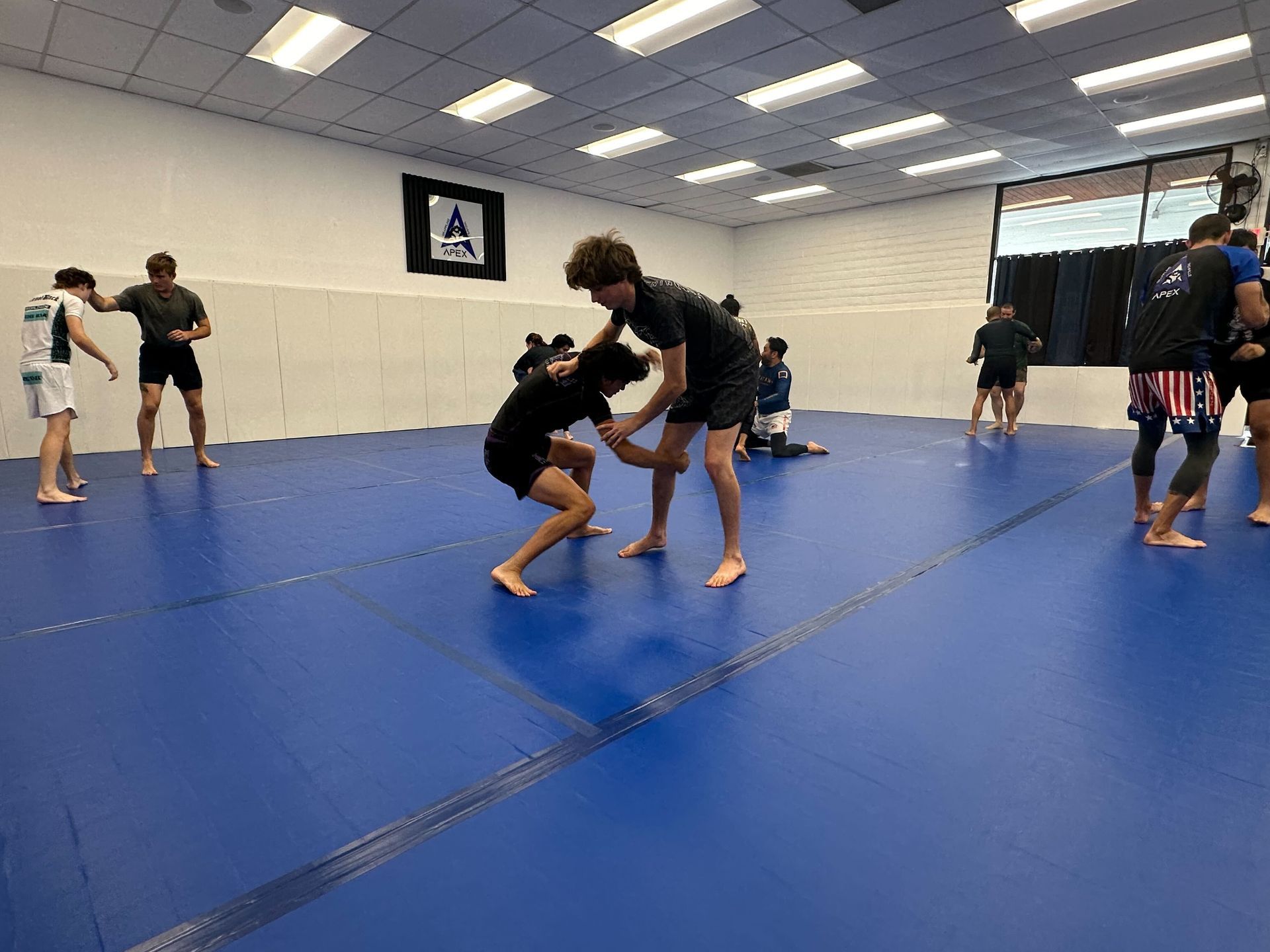
In our classes, we see balance, flexibility, and coordination improve for a simple reason: grappling forces your body to solve movement problems in real time. You are shifting weight, changing levels, rotating through hips and shoulders, and stabilizing while someone else is trying to off balance you. It is physical learning, and it adds up fast.
Why grappling changes your movement skills so quickly
Grappling is full body and multi directional. You are rarely moving in a straight line, and you are rarely using just one joint at a time. Instead, you link posture, footwork, hips, grip, and breathing into one continuous system. That is why it supports balance, flexibility, and coordination all at once.
Research on functional training in combat sports shows measurable gains in dynamic balance and flexibility, including improvements on tests like one leg balance and sit and reach, with flexibility effect sizes around 0.80 in some programs. In plain terms, the movement practice works, especially when it is consistent for 6 to 12 weeks.
And there is a practical side too. When you learn to base out, sprawl, bridge, hip escape, stand up in base, and move under pressure, you are basically training your body to stay organized when things get messy. That is coordination training you can feel.
Balance: how we build a stronger base without “balance drills”
Balance in grappling is not about standing on a wobble board for the sake of it. It is about staying stable while you move, and staying stable while you get moved. That is dynamic balance.
Balance starts with posture and pressure
In standing exchanges, you learn to keep your center of gravity under control while you change levels for takedowns, defend grips, or circle away from pressure. A small posture mistake shows up immediately, so your body learns quickly.
On the ground, balance looks different but it is still balance. You are constantly building a base with hands, feet, knees, elbows, and hips. If your base is weak, you tip. If your base is strong, you can breathe and make choices.
The “base triangle” you practice without thinking about it
A simple way to picture grappling balance is this: you are always trying to keep three points connected to the mat, then adjusting those points as you move. Sometimes it is feet and a hand. Sometimes it is knees and an elbow. That constant recalculation trains your nervous system.
Over time, your body stops panicking when you get pulled or bumped. You start reacting with structure. For adults, that can translate to better stability on hikes, fewer ankle rolls, and more confidence with quick direction changes.
Flexibility: mobility you earn through useful positions
Flexibility is not only touching your toes. In grappling, flexibility is the ability to get into and out of positions safely. It is hips that open enough to shrimp cleanly. It is shoulders that rotate without feeling cranky. It is a spine that can bridge and turn.
Why grappling flexibility feels different than stretching
Static stretching can help, but it does not always teach you control in the new range. Grappling blends mobility with strength and timing. You move into end ranges while bearing load, then you learn to exit that range smoothly.
Combat sports research backs this up. Training styles that use functional movement patterns and repeated transitions tend to improve flexibility scores, including sit and reach, and often in relatively short sessions under an hour, which matters for busy adults.
Where adults usually loosen up first
Most adult beginners notice changes in a few key areas:
• Hips, from repeated hip escapes, guard movements, and standing level changes
• Hamstrings and posterior chain, from wrestling stance and sprawling mechanics
• Thoracic spine rotation, from turning to frames, posting, and technical stand ups
• Ankles, from kneeling, posting, and driving off the mat in scrambles
We still coach smart. You do not force range. You build it. That is the difference between “more flexible” and “more flexible and still healthy.”
Coordination: the hidden superpower of grappling in Vacaville
Coordination is your ability to make different parts of your body work together at the right time. Grappling is coordination on purpose. Hands fight for grips while hips angle out. Your head position matters. Your feet step at a specific rhythm. And if you are late by half a beat, the technique falls apart.
Proprioception: learning where your body is without looking
One reason adult grappling in Vacaville is so effective for coordination is proprioception, your internal body awareness. Grappling constantly stimulates proprioceptors through contact, pressure, and shifting positions. You learn what “stacked” feels like, what “off balance” feels like, and how to fix it without having to think in sentences.
That can show up in daily life as better posture at a desk, smoother movement carrying groceries, and less awkwardness when you have to catch yourself during a slip.
Timing beats speed, and that is good news
Beginners sometimes assume coordination requires being naturally athletic. In reality, most coordination in grappling is timing. We teach you to connect movements in sequences: grip, step, angle, finish. On the ground: frame, hip out, recover guard. Timing can be learned at any age.
And because coordination improves when the nervous system gets repeated, correct reps, we structure classes so you get plenty of them before intensity goes up.
What training looks like in our program
Our goal is to give you enough structure to progress, and enough variety that your body adapts. While every class has its own feel, most sessions include a few consistent elements that drive balance, flexibility, and coordination improvements.
The class pieces that create the biggest movement changes
Here are the training components that tend to deliver the most “real life” movement payoff:
• Movement warm ups that include hip escapes, bridges, technical stand ups, and controlled rolls
• Technique practice focused on leverage, posture, and alignment, not muscling through positions
• Positional sparring that limits choices so you can build timing and coordination safely
• Live rounds scaled to your experience so you can apply skills under pressure without chaos
• Cooldown habits that help you leave class feeling better, not wrecked for the next day
This approach matches what research suggests about functional training and combat sports: repeated, multi joint patterns under realistic constraints improve balance and flexibility, and the neuromuscular demands sharpen coordination.
The science behind the gains, without getting lost in the weeds
A lot of what we do lines up with trends in 2023 to 2025 research on combat sports conditioning. Functional training and plyometric style efforts, both common in grappling, show consistent improvements in dynamic balance and flexibility, and often improvements in strength and power through better motor unit recruitment and neuromuscular coordination.
You can see this in the way takedowns and scrambles work. You load, you explode, you stabilize, you re load. That eccentric to concentric cycle improves movement efficiency. Studies in Olympic combat sports also report notable gains in jump performance and flexibility compared with basic physical education, which is another clue that this style of training changes the body in a broad way.
For non athletes, the takeaway is simple: you are not just learning techniques. You are upgrading how your body organizes itself.
How soon you can expect changes
Progress depends on consistency, recovery, and how you train, but most adults notice meaningful shifts faster than expected.
A realistic timeline for adult beginners
Many people training grappling 2 to 3 times per week report changes in:
1. Weeks 1 to 3: improved body awareness, less stiffness after warm ups, better posture under fatigue
2. Weeks 4 to 8: clearer balance during transitions, smoother hip movement, better coordination in simple chains
3. Weeks 9 to 12: noticeable flexibility improvements, more stable base in live rounds, calmer reactions under pressure
Research often points to 6 to 12 weeks as a window where flexibility gains show up strongly, and that matches what we see on the mat when attendance is steady.
Practical ways to get more balance, flexibility, and coordination from every class
You do not need to train harder to get these benefits. You need to train a little smarter. A few habits make a big difference, especially for adult grappling in Vacaville where work stress and tight schedules are real.
Simple cues we use every day
Try these the next time you train:
• Move at a pace where you can breathe through your nose during drills
• Treat warm ups like skill practice, not something to rush through
• Aim for clean reps before fast reps, especially in hip escapes and stand ups
• Ask for small adjustments, like foot placement or hip angle, and repeat immediately
• Leave one or two reps in the tank instead of grinding through fatigue with sloppy posture
These habits protect your joints while reinforcing the same motor patterns that improve stability and coordination.
Common questions we hear from adults in Vacaville
People searching for grappling in Vacaville often want reassurance that the training fits real bodies and real schedules. These are a few questions that come up all the time.
Does grappling really improve balance for beginners
Yes. Beginners improve because the environment demands it. Between base building, shifting weight, and learning to stay stable while moving, your balance system gets trained constantly. Functional training research in combat sports supports improvements in dynamic balance measures after structured programs.
How quickly can I see flexibility improvements
Many adults feel looser within a few weeks, but measurable flexibility gains tend to show up over 6 to 12 weeks with consistent attendance. The key is repeated movement through useful ranges, not forcing stretches.
Is this appropriate if I have not trained before
Yes. We scale intensity and start with fundamentals. Coordination and balance are trained progressively through drilling and positional work, so you build skill without being thrown into chaos.
What about coordination for older adults
Coordination improves through proprioception and controlled reps. Learning to stabilize, frame, and move with intention can also build confidence, which matters when the goal is to reduce fall risk and feel steadier day to day.
Take the Next Step
If you want fitness that makes you feel more stable, more mobile, and more coordinated, grappling is one of the most direct ways to get there. The movements are functional, the feedback is immediate, and the progress is surprisingly practical once you stick with it for a few months.
At Vacaville Grappling Academy, we coach these skills with a structured approach that respects where you are starting from, whether you are new to training or returning after time away. If you are looking for adult grappling in Vacaville that builds real balance, flexibility, and coordination you can use outside the gym, we would like to help you get on the mat and feel the difference.
Build stronger grappling skills and refine your technique by joining a grappling program at Vacaville Grappling Academy.