Grappling gives you a calm, practical way to control real situations without relying on size, speed, or perfect conditions.
When people ask us what self-defense should look like in real life, our answer usually surprises them a little: it should look like control, not chaos. That is why we teach grappling as a core skill, especially through Brazilian Jiu-Jitsu. It is built around leverage, positioning, and staying safe when someone is close enough to grab you, push you, or take you down.
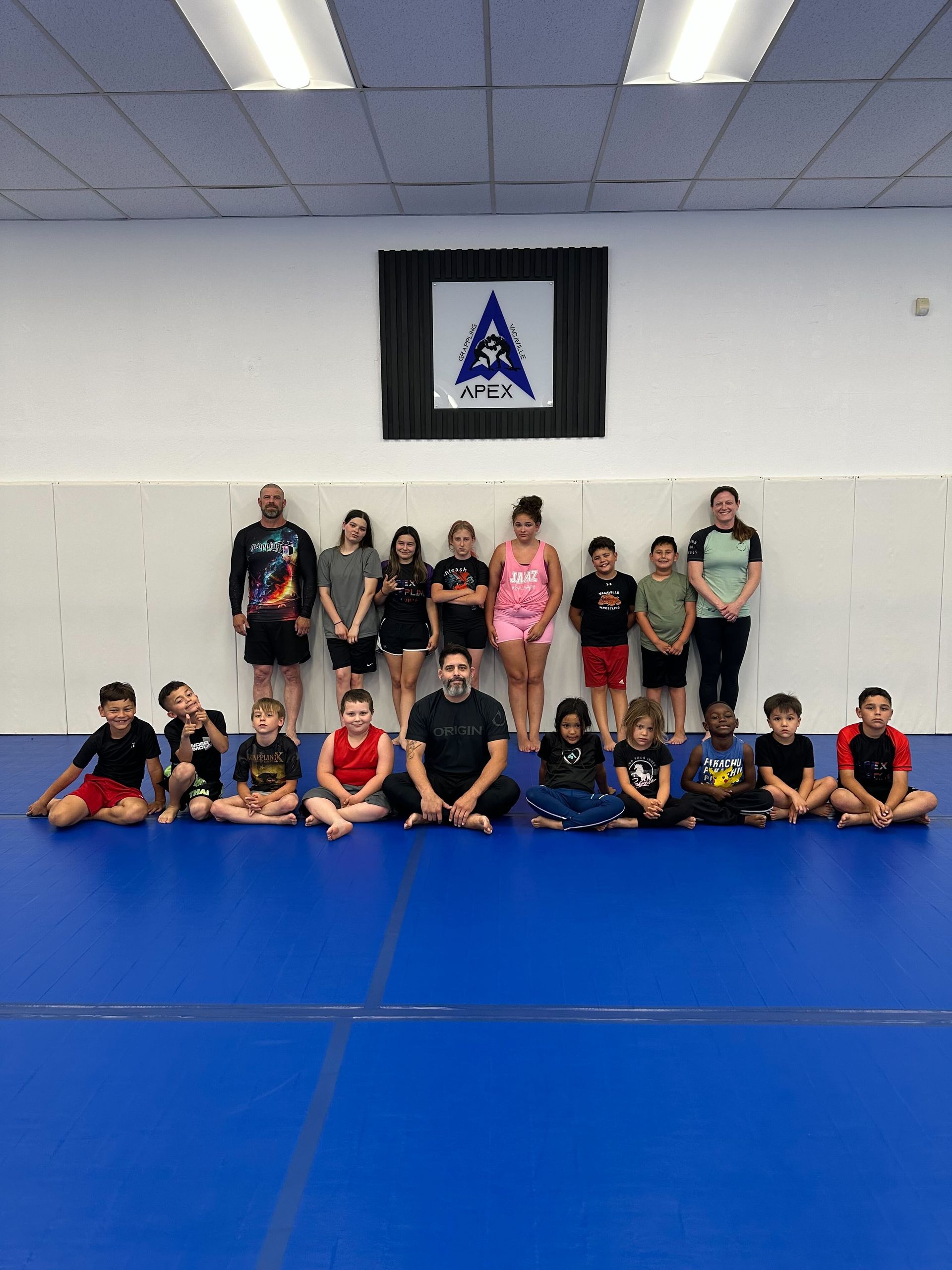
In Vacaville, we train with a mix of families, working adults, veterans, and people who simply want to feel more capable in everyday life. What makes this style of training different is that it scales. Kids can learn it. Adults can learn it. Older beginners can learn it. You can start where you are, and you can keep improving without needing to be naturally athletic.
And yes, it actually works. A lot of altercations end up in clinches, scrambles, or on the ground, and grappling prepares you for that reality in a structured, coached environment where safety is non-negotiable.
What Makes Grappling So Effective for Real-World Self-Defense
Self-defense is not a movie scene. Most situations happen fast, up close, and with very little space. Striking can be useful, but it also depends on timing, distance, and the willingness to trade shots. Grappling is different: it gives you ways to survive and control even when the distance is already gone.
When you learn positional control, escapes, and how to manage someone’s balance, you are building a skill set that does not require you to be the bigger person. That is the quiet advantage of technique. Leverage lets smaller bodies protect themselves against larger bodies, and that is a big reason this training fits so many ages and backgrounds.
We also like that grappling can be trained with realism without turning every class into a brawl. You get live, resisting practice, but it is coached and scaled. That matters, because pressure testing is where self-defense becomes something you can actually do, not just something you watched once and hope you remember.
The Ground Is Not the Worst Place If You Know What You Are Doing
People often say, “I do not want to go to the ground.” We agree. Avoiding the ground is smart. But if you get knocked down, slip, or get tackled, your options matter. Grappling gives you options.
Our training puts a lot of emphasis on:
- Getting back to your feet safely when you can
- Protecting your head and posture when you cannot
- Using frames, hip movement, and angles to create space
- Controlling an attacker long enough to disengage or get help
That is a self-defense mindset, not a sport-only mindset. And it is one of the reasons adults looking for adult grappling in Vacaville tend to stick with it once they feel how practical it is.
Why Technique Beats Strength (And Why That Matters for All Ages)
The older we get, the more we appreciate training that rewards skill instead of wear-and-tear. Grappling is fundamentally a problem-solving art. You learn how to place your body, how to distribute weight, how to create pressure with structure instead of muscle, and how to breathe under stress. Those are learnable skills.
Because technique matters so much, a teenager can train safely with an adult, and a smaller beginner can learn to manage someone larger. This is not wishful thinking. It is the basic physics of leverage and position.
We see it in class all the time. A newer student might start out thinking self-defense means “hit harder,” and a few weeks later the light bulb goes on: posture breaks, angles, and control change everything. That moment is addictive in the best way.
Confidence Without Recklessness
One of the biggest benefits we hear from adults is that training changes how you carry yourself. Research on adult practitioners backs this up too, with 87.6% reporting boosted confidence and 87.5% reporting reduced anxiety. That does not mean you start looking for trouble. It usually means the opposite: you feel less reactive, because you trust your ability to handle yourself if something ever goes sideways.
There is also something deeply practical about learning to stay calm while someone is trying to hold you down. You learn that panic wastes energy. You learn that small adjustments add up. Those lessons show up outside the gym in a pretty normal way: you handle stress better, and you make clearer decisions.
Self-Defense That Supports Health, Not Just Survival
We love self-defense, but we also like that the training has real health benefits you can feel in daily life. Grappling builds cardiovascular fitness in a way that is hard to fake, because the effort comes in waves: movement, isometric strength, breathing control, and short bursts of intensity.
Studies have linked BJJ training to improved cardiovascular health, strength, endurance, flexibility, and body awareness. For many of our students, that “body awareness” part is the sneaky game-changer. You start noticing posture. You notice balance. You notice tension in your shoulders when you are stressed. Then you learn how to relax and move better.
And if you are worried about safety, you are not alone. One reason people choose grappling over striking-heavy styles is longevity. We can train with control, tap early, and progress at a pace that keeps you on the mat for years, not weeks.
A Note on Injury Reduction and Safer Use of Force
There is also compelling evidence that grappling-based training can reduce injuries in high-stakes jobs. In one widely cited example, officers using force saw injury reductions including 48% fewer injuries to officers and 53% fewer injuries to persons during arrests, along with 23% fewer Taser uses. The point is not that everyone needs to be an officer. The point is that control-based skills can lower chaos, and lower chaos tends to mean fewer injuries.
That is the heart of practical self-defense: you want the situation to end with as little harm as possible, including harm to you.
Why Grappling Fits Vacaville Life Specifically
Vacaville is a mix of suburban neighborhoods, commuting professionals, families, and long-time residents who want to stay active. It is also close enough to bigger city patterns that personal safety is not an abstract idea. People want skills that work in everyday spaces: parking lots, hallways, kitchens, sidewalks.
Grappling in Vacaville works because it does not depend on perfect conditions. You do not need a wide-open area. You do not need special equipment. You need your body, your awareness, and a skill set that holds up under pressure.
We also see a lot of families who want something better than “just an activity.” Parents want their kids to build real confidence. Adults want training that is more than a workout class. And older students want movement that strengthens them without feeling like punishment.
What You Will Actually Learn in Class (And How It Builds Real Skill)
We keep our training structured because structure is what makes progress predictable. A typical class is usually 45 to 60 minutes: warm-up, technical instruction, drilling, and then live training (often called rolling) that is scaled to your experience level.
Here is what we prioritize in our beginner pathway:
- Positional fundamentals like guard, mount, side control, and back control, so you understand what “winning” a position means
- Escapes and defenses, because self-defense starts with survival and recovery
- Takedown awareness and clinch basics, so you are not lost standing up
- Control and restraint options, including how to hold someone without needing to strike
- Live, coached practice that teaches timing and composure under resistance
If you are brand new, you do not need a gi on day one. Comfortable athletic wear is enough to start, and we will guide you from there.
How Often Should You Train to Feel Results?
Consistency matters more than intensity. A 2024 study found that 92% of martial arts trainees training twice weekly reported resilience gains. Twice a week is also realistic for most schedules, especially if you are balancing work, kids, or just, well, life.
If you train more, you will progress faster, but you do not have to make it your whole personality. Many adults start with two classes per week, build momentum, and then add a third day when the routine feels normal.
We also like being transparent about timelines. You can feel meaningful changes in 3 to 6 months: better balance, better conditioning, and a calmer reaction to pressure. Belt progression takes longer, and that is fine. Nationally, the average time to blue belt is often quoted around 3.5 years. We would rather you build durable skill than chase quick milestones.
Grappling for Kids, Teens, Adults, and Seniors: What Changes and What Stays the Same
The movements adjust based on age, but the principles stay consistent: posture, base, leverage, and control. The goal is always to help you build skill while keeping training appropriate to your body and your stage of life.
Kids and Teens: Confidence, Boundaries, and Body Control
For younger students, we focus on learning how to move well, how to stay safe, and how to problem-solve physically without panicking. Kids also learn respect and how to train with partners, which matters a lot in a world that sometimes pushes competition without teaching cooperation.
Adults: Practical Protection and Stress Relief
Adults usually come in wanting self-defense, fitness, or both. What many discover is the mental side: training teaches you to stay present under pressure. Research on adult practitioners shows 81.3% report enhanced mental flexibility, and many report reduced anxiety. That tracks with what we see. You leave class tired, but your mind feels quieter.
Older Beginners: Strength, Mobility, and Smart Pace
If you are older and curious, the key is pacing and partner selection. We coach you on how to tap early, how to protect joints, and how to train efficiently. Grappling can be low-impact when it is done with control, and it can support long-term mobility and strength without needing to “go hard” every round.
Common Questions We Hear (And Straight Answers)
Is grappling suitable for beginners?
Yes. We teach fundamentals first, and we scale live training to your experience. You are not expected to know anything walking in.
Does it work for self-defense?
Yes, especially because it addresses close-range control and the reality that many altercations involve clinching or going to the ground. The goal is control, escape, and safety.
Is it safe?
No contact sport is risk-free, but we take safety seriously: controlled training, clear tapping rules, and progressive intensity. Grappling is also a style you can practice for the long haul.
Do I need to be strong or athletic?
No. You will get stronger as you train, but leverage and positioning are the foundation.
Take the Next Step
Building real skill is not about hype. It is about showing up, learning the fundamentals, and practicing them against honest resistance in a safe environment. That is what we do every day, and it is why grappling remains one of the most reliable self-defense skills you can learn at any age.
When you are ready to train in a way that builds confidence, resilience, and practical control, we would love to help you get started at Vacaville Grappling Academy. We keep the process simple, the coaching clear, and the training grounded in what works.
Continue your grappling journey beyond this article by joining a class at Vacaville Grappling Academy.