Grappling gives kids a fast, real confidence boost because progress is measured in what your child can actually do under pressure.
If you are looking for a structured, positive activity for your child in Vacaville, Grappling is one of the most practical options we teach because it turns nervous energy into usable skills. Kids do not just memorize moves and hope they work later. Our training is built around fundamentals that show up immediately in how your child stands, moves, and handles challenges.
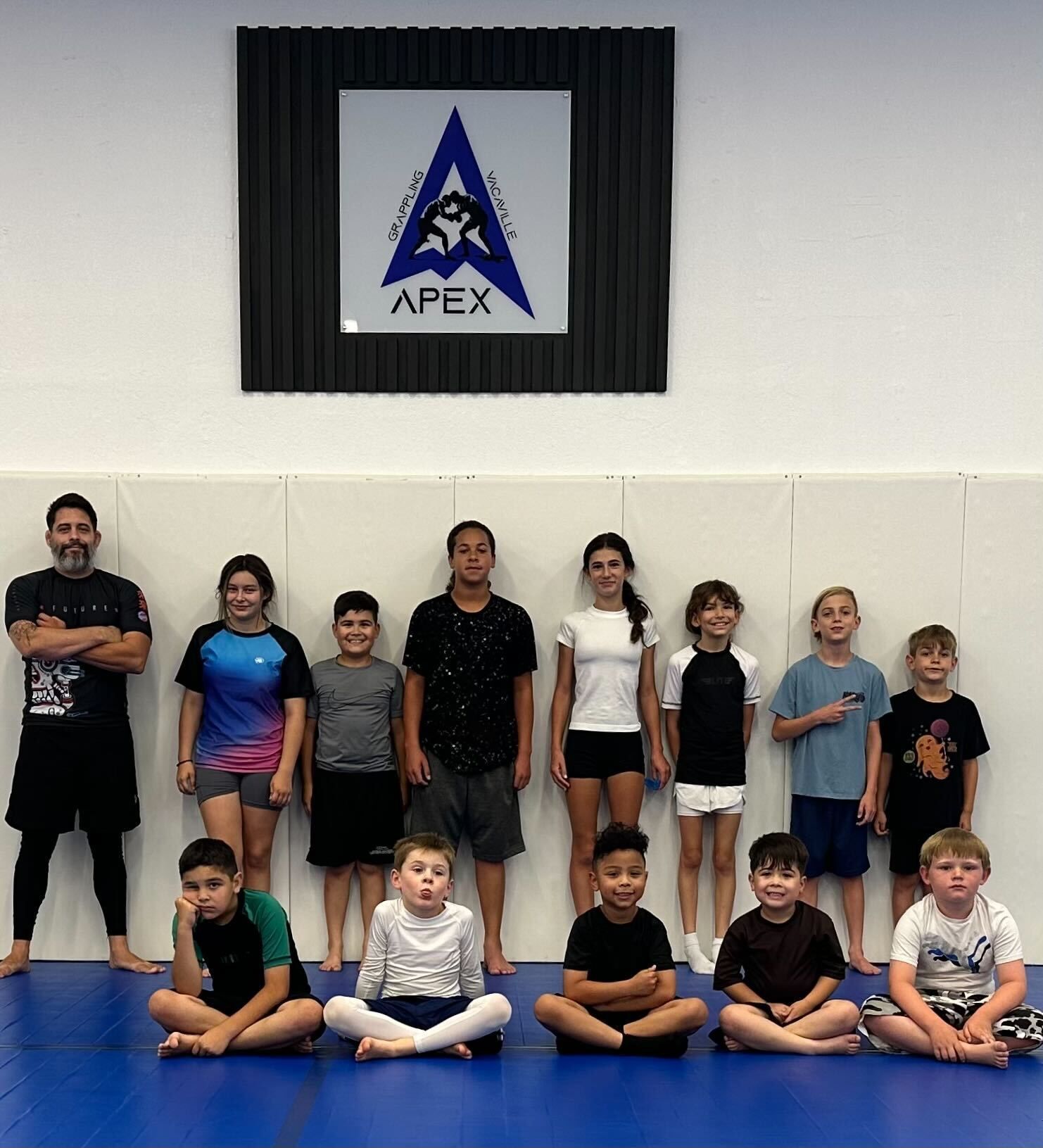
Our youth program is designed for ages 7-13 and focuses on wrestling fundamentals, submission grappling, and No-Gi Jiu-Jitsu in a way that is safe, age-appropriate, and genuinely engaging. We keep classes organized and upbeat, but we also keep them honest: when kids learn how to control position, balance, and distance, confidence starts to look less like a pep talk and more like posture, calm breathing, and better decisions.
Parents often tell us they want two things at the same time: a place where their child feels supported, and a place where the training still builds real resilience. That combination is exactly what our mat time is built for, week after week, with clear structure and supervision.
Why Grappling works so well for ages 7-13
Grappling is unique because it teaches kids how to solve a physical problem without relying on size or strength. A smaller, less athletic kid can learn how to frame, pivot, and move to a safer position. A naturally athletic kid can learn patience and control. Both types of kids benefit, and the results often show up faster than you would expect.
Because our youth classes include controlled live practice, kids learn to stay composed while something is actively happening. That is a big deal. It is one thing to practice a technique in the air. It is another to use it with a partner who is moving and reacting, while staying safe and respectful.
Our approach also helps kids build body awareness. Ages 7-13 is a sweet spot for developing coordination, balance, and core strength. When you give kids a system for movement, they start to feel comfortable in their own bodies, and that comfort tends to spill into school, sports, and social situations.
What your child learns in our youth program
We teach wrestling, No-Gi Jiu-Jitsu, and submission grappling fundamentals in a progression that matches how kids actually learn. We start with positions and movement patterns that protect joints and build confidence. Then we add layers: control, escapes, and safe ways to finish once a child has the maturity and technical base for it.
Here are a few core skill areas we emphasize:
• Movement and base: stance, level changes, hip movement, and how to stay balanced when someone pulls or pushes
• Takedown fundamentals: safe entries, simple finishes, and how to land and recover without panic
• Positional control: top pressure concepts, holding pins in a grappling context, and learning to stabilize before rushing
• Escapes and recovery: bridging, hip escapes, turning to safe angles, and getting back to the feet responsibly
• Submission awareness: what a submission is, how to recognize danger early, and how to tap and reset without ego
All of that is taught with supervision and clear rules. We care about skill, but we care just as much about how kids treat each other while they build it.
Confidence fast: what changes in the first 4-6 weeks
When parents ask how quickly Grappling helps, we like to be specific. You can usually see meaningful changes in the first month if your child attends consistently. Not “perfect technique” changes. Real-world changes, like better coordination, less hesitation, and more willingness to try something hard.
In weeks one and two, many kids are simply learning how to move on the mat, how to partner up, and how to listen while excited. That might not sound dramatic, but it is foundational. Once kids understand the rhythm of class, improvement tends to accelerate.
By weeks three and four, most kids start to connect the dots: they recognize a position, remember a simple escape, or complete a takedown entry cleanly. This is often where confidence shows up the loudest because kids can feel that their effort turned into a result.
Around weeks five and six, we often see resilience build in a more subtle way. Kids become harder to rattle. They get stuck, breathe, try again, and solve the problem instead of shutting down. That is the kind of toughness parents actually want, and it is earned, not forced.
Safety, supervision, and why our structure matters
Safety is not an afterthought in our kids classes. It is baked into how we coach, pair partners, and pace the room. We teach kids how to fall, how to post safely, how to control speed, and how to stop immediately when asked. Those habits matter just as much as any technique.
We also keep techniques age-appropriate. For youth Grappling, that means we prioritize positioning, control, and escapes. When we introduce submissions, we do it with clear guidelines and constant reminders: slow pressure, early taps, and zero “winning at all costs” behavior. Kids are learning a skill set, not proving something.
If your child is brand new, we keep the first classes simple. We would rather build clean fundamentals than rush into flashy moves that look cool but fall apart under real resistance.
What a typical class looks like
Our class format stays consistent so kids can relax and focus on learning. Predictability is underrated, especially for kids who feel nervous trying something new. Once the structure becomes familiar, effort goes up and anxiety drops.
A typical class includes warmups that feel like games but develop real athletic traits: agility, balance, core engagement, and coordination. Then we teach a focused technique or concept, followed by partner drilling where we coach details like posture, hand placement, and timing.
Finally, we include controlled live training. This is where Grappling really shines, because kids learn to apply technique with a moving partner in a safe environment. We set rules, monitor intensity, and make sure everyone stays respectful. No chaos, no bullying, no “alpha” nonsense, just kids learning and getting better.
Grappling and anti-bullying resilience without turning kids aggressive
A lot of parents want self-defense benefits, but also want their child to stay kind. We agree. Our goal is to build capability and calm, not aggression. Grappling is ideal here because it teaches control and de-escalation through positioning rather than striking.
When kids learn how to clinch safely, break balance, and control someone on the ground, it changes how they carry themselves. Confidence becomes quieter. Many kids become less reactive because they do not feel helpless anymore. And when a child does need to protect personal space, the skills are practical and close-range, which is often what real situations look like.
We also coach the “mental side” directly: using your voice, creating space, recognizing unsafe behavior, and knowing when to get an adult. Training should make your child safer, not more confrontational.
How to support your child’s progress at home
You do not need to coach techniques at home for your child to improve. Honestly, the best support is consistency, rest, and a good mindset around effort. If you want a simple approach that helps, focus on routine and encouragement rather than performance.
Here is what tends to work well for families:
1. Pick a realistic weekly training rhythm and stick to it for at least 6-8 weeks
2. Ask what your child learned, then let the answer be short if that is all you get
3. Prioritize sleep and hydration on training days since kids learn faster when recovery is solid
4. Celebrate effort, not outcomes, especially after a tough class where things did not click yet
5. Keep gear and a water bottle ready so arriving is calm and on time
Those small habits add up, and they also teach responsibility in a low-stress way.
For parents asking about Adult Grappling in Vacaville
Many parents end up curious about training too, and we get it. Watching your child learn Grappling can make you want to try it, especially when you realize it is as much about problem-solving as it is about fitness. We offer training for adults as well, and our adult room culture stays grounded in the same principles: fundamentals first, safety always, and steady progress you can measure.
If your goal is fitness, stress relief, or learning a practical skill set, Adult Grappling in Vacaville can be a surprisingly sustainable routine. You do not have to be “tough” to start. You just have to start, and then show up again.
Grappling in Vacaville: what makes a program actually effective
When parents search for Grappling in Vacaville, the biggest question is usually not “Is this legit?” It is “Will my child stick with it, and will it be a good influence?” We think an effective youth program has three ingredients.
First, the instruction has to be clear and repeatable. Kids need simple cues and consistent coaching. Second, the room has to be structured. A fun class is great, but it has to be organized fun with boundaries. Third, kids need live practice that is controlled and supervised, because resilience does not grow in a vacuum.
That is the framework we use. Your child learns fundamentals, gets coached closely, and gradually becomes comfortable doing hard things with composure. Over time, those habits become part of who your child is, not just something your child does on the mat.
Ready to Begin
If you want your child to build confidence the fast way, through real skill and steady progress, we would love to show you how our youth program works in person. Our classes are designed for ages 7-13, and we keep the training practical, safe, and engaging so your child can develop resilience without feeling overwhelmed.
Building strong kids takes consistency, a supportive room, and coaching that takes fundamentals seriously. That is the environment we have built at Vacaville Grappling Academy, and we are ready when you are.
Become part of a focused and supportive grappling community by joining a class at Vacaville Grappling Academy.