Grappling does not give you magic reflexes, but it can train you to notice, decide, and respond faster when it counts.
Fast reactions are not just about moving quickly. In real training, the bigger advantage is recognizing what is happening early enough to choose the right response. That is exactly why Grappling is such a powerful way to sharpen your reaction quality. Every hand fight, every weight shift, every scramble asks your brain and body to work together in real time.
In our classes, we focus on the kind of responsiveness that shows up under pressure, not just in perfect drills. You learn to stay calmer, read movement sooner, and commit to smart actions instead of freezing or guessing. Over time, that combination starts to feel surprisingly natural, even if you are brand new.
What “fast reflexes” really means in Grappling
When most people say reflexes, they imagine raw speed, like hitting a button the instant a light turns on. Grappling is different. You are not reacting to a single cue, you are reacting to a living opponent who is constantly giving you information with grips, posture, balance, breathing, and pace.
So the reflex you build is more like this: you recognize patterns earlier and respond with better timing. That is why Grappling can make you feel quicker, even if your pure reaction time on a stopwatch does not change dramatically.
Reaction quality beats reaction speed
If you only train speed, you might move fast in the wrong direction. In Grappling, moving first is not always the goal. Moving correctly is. We train you to pick up meaningful signals, such as:
• Pressure changes that signal a pass or a pin is coming
• Hip angles that show an escape window is opening
• Hand position cues that warn you about a choke or control
• Balance breaks that tell you when a sweep is available
Those are tiny details, but once you learn to spot them, your responses get cleaner and quicker. You start arriving on time instead of arriving late and trying to muscle your way out.
Why live training sharpens your reaction in a way drills cannot
We love structured drilling, but we also know why people improve quickly when they add live rounds and realistic situational work. Grappling is a reactive sport, and reaction is a skill you have to practice inside the messiness of real movement.
Live sparring creates perception action coupling
In simple terms, your eyes and body learn to cooperate. You see a shift, you feel a pull, you sense a turn, and your body starts choosing actions without needing a long internal conversation first. That is perception action coupling, and it is one of the most valuable benefits of consistent Grappling training.
In live rounds, you cannot pause and ask what comes next. You have to make decisions while your opponent is trying to make your decisions for you. That is where timing is built.
Situational rounds build quick solutions to common problems
A great way to improve reaction is to reduce the chaos just enough that you can focus on a specific moment. We use situational training to isolate positions where reaction matters most, like escaping bad spots, finishing control, or defending submissions.
Instead of hoping you end up in the right situation during free rolling, we put you there on purpose, safely, with guidance. That way you get many repetitions of the same decision tree, and your response becomes faster and more reliable.
Why no-gi Grappling often feels faster
No-gi Grappling tends to move at a quicker rhythm because there is less clothing to grab and slow the exchange down. Without gi grips, control relies more on body positioning, head and hand placement, and pressure through movement. You learn to stick to your opponent through transitions, not just hold on.
No-gi also has a wrestling flavored pace: more scrambles, more resets, more dynamic changes in top and bottom positions. That pace can be a perfect match for reaction training because the windows are smaller. You learn to take action when the opening exists, not two seconds later when it is gone.
Faster transitions teach you to commit
One of the sneaky benefits of no-gi is learning to commit to a decision. Hesitation is costly. When you wait, the opponent is already passing, already pinning, already climbing to the back.
We coach you to make choices with purpose. Even if the choice is not perfect at first, committed action gives you feedback, and feedback is how you get better. Over time, you stop playing defense with your mind, and your reactions get sharper.
The chain reaction you train every class
In day to day Grappling practice, reaction is not one thing, it is a chain. You train yourself to move through that chain more smoothly:
1. Notice the cue: grip, pressure, posture, angle
2. Interpret it: pass attempt, escape attempt, submission threat
3. Choose a response: frame, hip escape, re guard, stand up, counter
4. Execute with timing: not rushed, not late
5. Recover and reset: if it fails, you flow to the next option
That is why people often feel mentally “faster” after consistent training. The body is learning, yes, but the mind is also getting organized.
How reaction training shows up for adults in everyday life
Adult Grappling in Vacaville is not only about sport performance. Adults often tell us the biggest change is how they handle pressure. Not just physical pressure, but decision pressure. You get used to staying present while something is uncomfortable, and that carries over.
Better balance, better coordination, fewer awkward moments
Grappling teaches you to use your hips, legs, and posture in a coordinated way. Your balance improves because you spend time being off balance on purpose. That sounds odd, but it is true. You learn to correct yourself quickly.
That matters for athletic hobbies, weekend sports, and even the normal stuff: picking up kids, moving furniture, hiking local trails, or just not feeling stiff when you stand up after sitting too long.
A calmer nervous system under stress
Live rounds can raise your heart rate fast. The key is learning to breathe and think anyway. We build intensity progressively so you can adapt without feeling thrown into the deep end.
A calm reaction is a fast reaction. When your body is panicking, your reaction gets sloppy. When your body is steady, your timing improves.
Why kids and teens benefit from reaction based Grappling
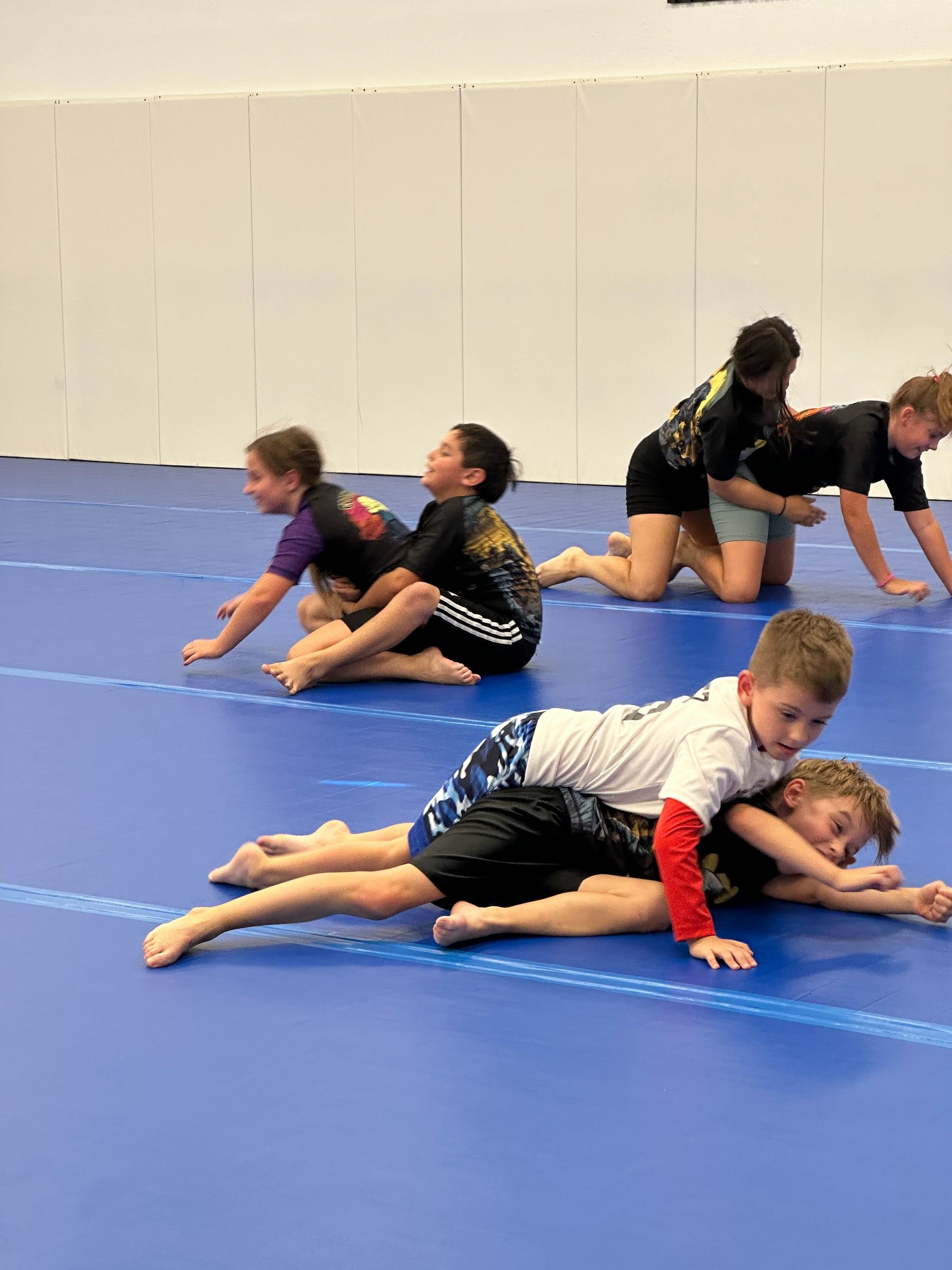
Youth Grappling Classes Vacaville parents usually want more than technique. You want your child to learn confidence, focus, and self control. Grappling supports that because it is interactive and structured, but it also asks kids to pay attention and solve movement problems in real time.
Focus and listening turn into better reactions
Kids improve fastest when they can connect instruction to immediate practice. In Grappling, a simple detail like where to place a hand or how to turn the hips can make an instant difference. That helps kids see cause and effect, and it encourages them to listen closely.
They also learn to manage impulses. Instead of flailing, we teach controlled movement, safe partners, and respectful intensity. That is a life skill, not just a sports skill.
Confidence without bullying energy
Grappling gives kids a way to feel capable without needing to show off. Because training is cooperative as well as competitive, kids learn to work with partners, not just “beat” someone. We keep the environment positive and structured, so confidence grows in a healthy way.
And yes, kids do get quicker. You can see it in how they sprawl, how they base, how they regain balance, how they stop freezing when something changes.
What you can expect in your first class
Starting something new can feel weird, even if you are excited. We keep the first experience straightforward. You will warm up, learn a few core movements, practice a technique with a partner, and usually do a controlled form of live work based on your comfort level.
If you are worried about being out of shape, that is normal. Grappling fitness is specific. It builds as you train. We would rather you show up consistently than try to “get in shape first” and never start.
Here is what we typically focus on early so you can build reactions safely:
• Fundamentals of posture, base, and pressure so you stay stable
• Simple escapes that teach you how to stay calm in bad positions
• Basic control positions so you understand leverage and safety
• Clear rules for training intensity so partners can trust each other
• Progressive sparring so reaction skills grow without overwhelm
How often you should train to notice faster reactions
There is no single perfect number, but consistency is the real driver. If you train sporadically, you spend most of your time re learning. If you train regularly, the patterns stick, and your reactions improve because your brain stops treating every situation as brand new.
Many students notice changes in a few weeks: better balance, smoother movement, less hesitation. Bigger changes, like feeling composed in scrambles and confidently defending submissions, come with longer practice. If you want a practical plan, check the class schedule page and choose times you can realistically keep, even on busy weeks.
Take the Next Step
If you want sharper reactions in a way that actually holds up under pressure, Grappling is one of the most practical paths, and our training is built around that reality. Because we focus on no-gi and submission grappling, you spend your time learning to read movement, manage scrambles, and respond decisively, not just memorize steps.
At Vacaville Grappling Academy, we keep the process approachable for beginners while still giving experienced students the live training that develops timing and real reaction quality. If you are looking for Adult Grappling in Vacaville, or you are researching Youth Grappling Classes Vacaville for your child, you can start with one class and build from there.
Step onto the mats with confidence and start learning No-Gi Jiu-Jitsu at Vacaville Grappling Academy.