A great youth grappling program builds real confidence and fitness without requiring your child to be “a sports kid” first
Parents around Vacaville ask us a version of the same question all the time: Is a youth grappling program really worth it, or is it just another activity that fades out after a few weeks? We get it, because families are busy, kids have big feelings, and schedules can feel like a puzzle you never quite finish.
What makes youth grappling different is that progress is tangible. Your child learns how to move better, breathe through pressure, and solve problems in real time, all while getting a full-body workout that rarely feels like “exercise.” And because training is structured, we can support kids who are shy, energetic, anxious, or just figuring themselves out.
In this article, we’ll break down what youth grappling can do for your child, what you can expect from youth grappling classes Vacaville families rely on, and why youth grappling in Vacaville is such a practical fit for modern kid life.
What “Grappling” Means for Kids (And Why It Works)
When people hear grappling, they sometimes picture chaotic fighting. In a well-run youth setting, it’s the opposite. Grappling is a skill-based sport built on balance, leverage, timing, and control. Instead of relying on strength or speed alone, kids learn to use technique, positioning, and calm decision-making.
In our youth grappling program, we keep the focus on safe movement patterns, body awareness, and respectful training. Kids spend a lot of time learning how to fall safely, how to maintain posture, how to move their hips, and how to protect themselves. Those might sound like “martial arts details,” but they translate directly into everyday athleticism.
A big reason it works is that grappling gives kids immediate feedback. If a technique is off, the position doesn’t work. If they rush, they lose balance. If they breathe and think, they improve fast. That cause-and-effect loop is powerful for kids who need structure that still feels fun.
Physical Benefits: Strength, Coordination, and Real Fitness
We’re careful not to promise magic. But the research around youth martial arts and combat sports is pretty convincing: kids who participate tend to show higher motor skill development and stronger physical benchmarks than non-participants. Studies have found meaningful gains in locomotor skills, manipulative skills, and muscular fitness, with one comparison even showing better standing broad jump performance among participants.
What we see on the mat lines up with that. Grappling is full-body, but it’s also joint-friendly when taught correctly because there’s no striking and the pace is controlled. Over time, kids build the kind of functional strength that shows up everywhere: climbing, sprinting, tumbling, even sitting with better posture.
What improves most in a youth grappling program
- Balance and coordination through footwork, base, and controlled movement
- Core strength from bridging, shrimping, and posture drills
- Grip and upper-body endurance from clinch and control positions
- Cardio and breathing efficiency during timed rounds and games
- Flexibility and mobility through warmups and technical repetition
That’s why youth grappling classes Vacaville parents choose often become a “foundation sport,” even for kids who also play soccer, baseball, or basketball. The movement quality carries over.
Mental Benefits: Confidence, Resilience, and Self-Control
Here’s where grappling really surprises families. Yes, your child gets fitter. But the mindset changes can be even more noticeable.
Grappling teaches kids how to stay calm when something feels hard. Not in a cheesy motivational way, but in a practical way: you’re in a challenging position, you breathe, you problem-solve, and you work your way out. That repeated experience builds self-efficacy, which is the belief that “I can figure this out.”
Research across martial arts also links training with improved self-discipline, confidence, and resilience, along with reductions in aggressive behavior and risky outcomes in some youth populations. In our experience, the kids who benefit most aren’t always the loud ones. Often it’s the quiet kid who starts standing taller after a few months, or the high-energy kid who learns how to channel intensity into technique.
A youth grappling program also gives kids a safe relationship with “losing.” On the mat, tapping out isn’t failure. It’s feedback. Kids learn to reset quickly, ask questions, and try again. That’s a life skill, not just a sports skill.
Social Benefits: Respect, Belonging, and Better Peer Skills
Kids don’t just train in a room. They join a mini-community with rules, routines, and mentorship built in.
Grappling requires cooperation. Your child can’t learn without a partner, and partners need to take care of each other. That means kids practice communication, boundaries, and empathy in a very real way. We also reinforce respect through how students line up, how they drill, and how they handle rounds with different partners.
A structured belt or rank progression adds another helpful layer. Kids see that steady effort leads to milestones. They also learn that higher rank comes with responsibility: being a good training partner, helping newer students, and keeping the room safe.
For many families exploring youth grappling in Vacaville, that social structure is a huge relief. It’s a place where kids can belong without needing to be the funniest, fastest, or most popular.
Safety: What Parents Should Know Before the First Class
Safety is a fair concern, and we take it seriously. Youth grappling is considered a safe activity when it’s structured well, supervised, and age-appropriate. We coach technique before intensity, and we teach kids to communicate, tap, and reset.
We also build safety into the culture. If a child is being too rough, we address it immediately. If someone is nervous, we slow things down. If a student is advancing quickly, we still make sure foundations are solid.
Our approach to keeping training safe
1. We separate students by age and experience so pairings make sense.
2. We teach tapping early and reinforce it constantly.
3. We prioritize control and posture before live sparring.
4. We supervise closely and adjust drills based on maturity and focus.
5. We keep the room respectful so kids feel comfortable speaking up.
If you’re wondering what to bring, most kids start with comfortable athletic clothes and water. We’ll guide you from there, including how uniforms work and when gear is needed.
Ages and Stages: When Kids Get the Most Out of Grappling
Kids can start at different ages, but the benefits show up differently depending on developmental stage.
For many children, ages 8 to 13 are a sweet spot for skill-building. They’re old enough to follow multi-step instruction, but still young enough to absorb movement patterns quickly. Teens often gain something slightly different: leadership, emotional regulation under stress, and the confidence that comes from mastering complex positions.
The main thing we look for isn’t a specific age. It’s readiness to participate safely. Can your child listen, follow directions, and work with a partner? If yes, we can usually build from there.
What a Typical Class Feels Like (So You Can Picture It)
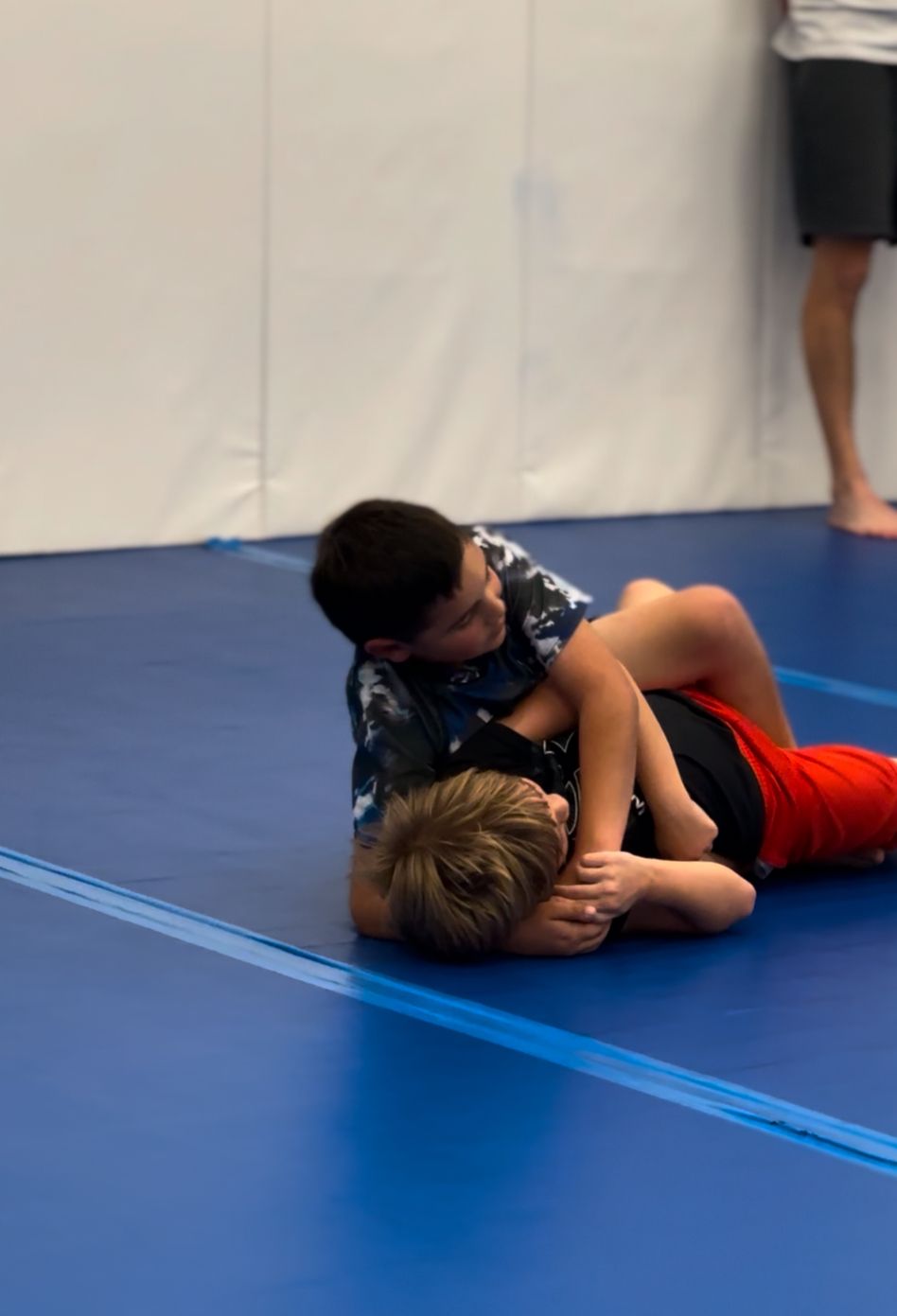
A lot of parents tell us the unknown is the hardest part. So here’s the vibe: the room is active, but not chaotic. You’ll hear kids laughing during warmups, then getting focused during technique. You’ll see coaches correcting posture, reminding kids to breathe, and pairing students thoughtfully.
Most classes include warmups that look like movement games, followed by technique practice, then controlled rounds where kids apply what they learned. We keep things progressive so kids don’t get thrown into situations they’re not ready for.
A quality youth grappling program should feel challenging but doable. Your child should leave tired, a little proud, and usually hungry.
How Progress Happens: Small Wins That Add Up
Parents often want to know, “How long until my child improves?” The honest answer is: improvement starts on day one, but it shows up in layers.
Early progress looks like learning how to move on the ground without panic. Then it becomes holding position, escaping, or remembering a sequence. Later, kids start linking skills and adapting on their own. That’s when you’ll hear them explain a technique in the car ride home in surprising detail.
We also use clear milestones so kids feel momentum. Earning rank is motivating, but we care just as much about quieter signs of growth: showing patience with a partner, listening the first time, or choosing control over scrambling.
Why This Fits Vacaville Families Right Now
Vacaville is a busy, family-centered city, and kids here juggle school, screens, social pressure, and a lot of stimulation.
Grappling offers something rare: a hands-on, screen-free environment where effort is rewarded, mistakes are normal, and resilience is trained like a muscle.
There’s also a broader trend toward interactive fitness because repetitive workouts don’t hold kids’ attention for long. Grappling solves that naturally. Every round is a puzzle, every partner feels different, and every class offers something new to figure out.
If you’ve been looking for youth grappling classes Vacaville families can stick with long-term, consistency matters more than intensity. A couple classes a week, done steadily, can reshape your child’s confidence, fitness, and focus.
Take the Next Step
Building real skills takes a supportive room, a clear progression, and coaching that understands kids. That’s exactly what we’ve built through our youth grappling program at Vacaville Grappling Academy, with classes designed to help your child grow physically, mentally, and socially without losing the fun.
If you’re ready to explore youth grappling in Vacaville with a program that values safety, structure, and steady confidence, we’d love to help you get started and feel comfortable from the first day forward.
To take your first class with us, sign up for a free trial.